The 7 Costly Mistakes Property Managers Make with Commercial Flooring
April 14, 2025
Published by Juan Fiallo – Reliable Floor Care
Keeping commercial floors clean, safe, and looking their best is one of the most overlooked aspects of facility management, until something goes wrong. Scuffed stone in the lobby, stained or matted carpet, or cracked tile doesn’t just look bad; it signals to customers and employees that the building isn’t well cared for. Worse, deteriorated flooring creates real slip-and-fall liability unnecessarily increasing risk for business owners.
The good news is that effective commercial floor care doesn’t require guesswork. With the right routine, the right products, and a solid plan, you can dramatically extend the life of any floor while keeping costs under control.
I’ve put together a list of the most important commercial floor care tips to guide you.
The single biggest shift facility managers can make is moving from reactive cleaning to a proactive, routine-based system. Most floor damage including: scratches, staining, grime, etched finishes, are cumulative. It builds gradually from skipped cleanings, missed spills, and inconsistent maintenance.
These can all be avoided by putting the correct system in place.
A well-designed floor care system combines three layers:
Each layer reinforces the others, if you skip one your space’s floors will deteriorate faster. Meaning more replacement costs down the line.
Daily cleaning is the foundation of any effective commercial floor care system. In high-traffic areas such as lobbies, hallways, restrooms, and cafeterias, debris and moisture are introduced constantly. Without daily attention, debris and soil act like sandpaper on floor surfaces, grinding down finishes and embedding in fibers.
For hard floors, daily tasks should include:
For commercial carpet, daily vacuuming is essential, not optional. Surface vacuuming removes loose soil and prevents it from working deeper into carpet fibers where it causes long-term damage and odor.
The practical rule of thumb: the more foot traffic a zone handles, the more frequently it needs attention.
One of the most common and costly commercial floor care mistakes is using the wrong products or methods for a given surface. Each flooring material has specific needs, and ignoring them can cause irreversible damage.
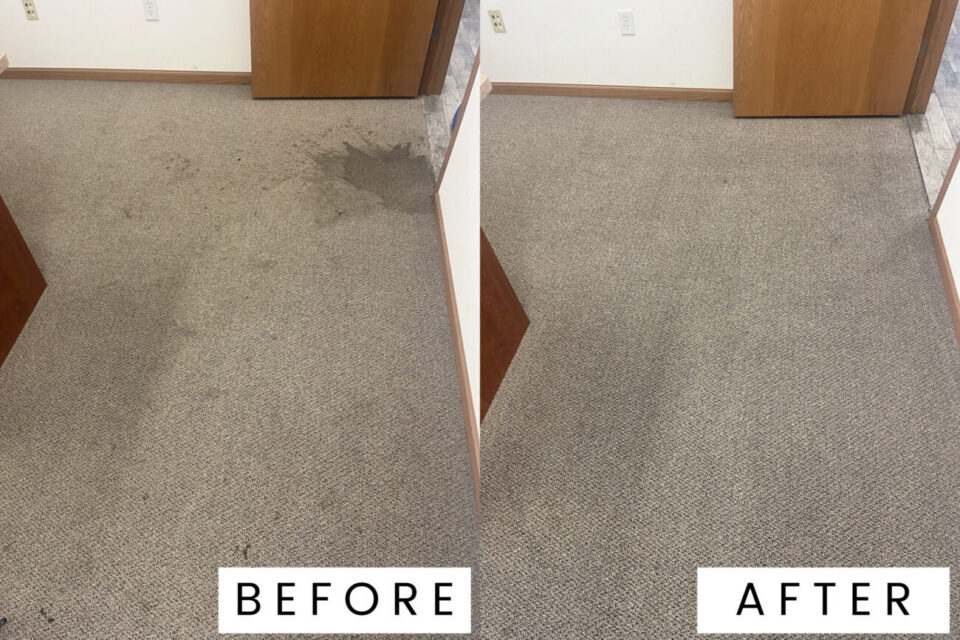
Commercial Carpet Requires regular vacuuming plus periodic hot-water extraction or deep cleaning. Surface cleaning alone won’t remove the embedded soil that causes fiber breakdown, discoloration, and odor/allergen build up over time.
Tile and Grout Needs cleaners formulated to be safe for grout and the tile finish. Harsh chemicals can erode grout over time, leading to costly repairs. Periodic scrubbing or deep cleaning is usually necessary to maintain appearance.
Hardwood Requires soft tools and non-abrasive cleaners made specifically for finished wood. Excess moisture is the enemy: it can warp planks and damage the finish permanently.
Laminate Like hardwood, laminate is highly sensitive to moisture. Low-moisture mopping methods are essential to prevent swelling, buckling, and delamination.
Concrete, Stone, and Terrazzo These surfaces are durable but not maintenance-free. Depending on the finish, they may need daily cleaning, periodic scrubbing, and sealing to protect against staining and surface wear.
VCT and Resilient Flooring Vinyl composition tile and similar resilient floors often require buffing, polishing, stripping, and periodic recoating to maintain their shine and durability.
When in doubt, always consult the manufacturer’s guidelines or a professional floor care service to confirm the right approach for your specific surface.
If there’s one preventive measure that delivers outsized results, it’s entrance matting. A well-placed entrance mat at every building entry point captures dirt, moisture, and debris before it travels across your floors.
The math is straightforward: less soil tracked in means less cleaning required, less surface wear, and fewer slip-and-fall hazards. Entrance mats also reduce the volume of cleaning chemicals needed over time, making them one of the most cost-effective tools in any floor care program.
For best results, use commercial-grade matting that extends at least six feet from the entrance, and make sure mats themselves are cleaned and maintained on a regular schedule.
Daily maintenance keeps floors clean, but it doesn’t reverse the gradual wear that comes with commercial use. That’s where periodic deep cleaning and restoration come in.
Depending on the floor type and traffic level, periodic maintenance may include:
A common guideline for high-traffic hard floors is monthly buffing, with recoating every six months or so depending on wear. The goal is to schedule these treatments before deterioration becomes visible, not after. Reactive restoration is always more expensive than proactive maintenance.
One-size-fits-all cleaning schedules don’t work well in commercial facilities. Lobbies and cafeterias take far more abuse than a back office or storage room. Building a zone-based schedule allows you to concentrate resources where they’re needed most and avoid over-servicing low-traffic areas.
Consider organizing your floor care plan around zones like:
This approach is more efficient and keeps budgets under control without sacrificing results where it matters most.
The tools and machines you use matter as much as the methods. Using the wrong equipment, or underpowered equipment, will leave floors underserved regardless of how frequently cleaning happens.
For large commercial facilities, autoscrubbers and scrubber-dryers can dramatically improve cleaning consistency and efficiency compared to manual mopping. For carpet, strong-suction commercial vacuums and extraction machines are the standard. Consumer-grade equipment simply won’t perform at commercial scale.
The key principle is to match equipment to facility size and floor type. Investing in the right tools reduces labor time, improves results, and minimizes the risk of surface damage from mismatched machines.
Beyond entrance mats, several other preventive practices can significantly extend floor life:
Prevention is almost always cheaper than correction. Small protective measures, applied consistently, add up to meaningful savings over the life of a floor.
Consistency is the hardest part of any commercial floor care program. Staff turns over, schedules shift, and without clear documentation, tasks get skipped. A written floor care plan solves this.
An effective plan includes:
With a documented plan, floor care becomes a repeatable process rather than something that depends on institutional memory. It also makes onboarding new cleaning staff faster and more reliable.
Some floor care tasks are beyond the scope of routine maintenance, and attempting them without the right expertise can cause more harm than good. Deep restoration work, finish stripping and recoating, stone honing and polishing, and epoxy floor repair are all examples where professional service delivers better results and protects your investment.
A professional commercial floor care company can also assess your current program, identify gaps, and recommend the right maintenance schedule based on your specific floor types and traffic patterns.
Effective commercial floor care comes down to a consistent formula: clean daily, maintain by floor type, protect high-traffic zones, and schedule periodic restoration before damage becomes visible.
Facilities that follow this approach keep their floors looking better, spend less on reactive repairs, reduce liability exposure, and get more years out of every flooring investment. It’s one of the highest-return maintenance programs any building can have.
Need help building a commercial floor care program that works for your facility? Contact Reliable Floor Care to speak with a Floor Care Specialist.
Reliable Floor Care provides professional commercial floor maintenance services for businesses, institutions, and facilities of all sizes. Visit us online to learn more.