The 7 Costly Mistakes Property Managers Make with Commercial Flooring
April 14, 2025
Published by Juan Fiallo – Reliable Floor Care
Your floors take more abuse than almost any other part of your building. Every inch of foot traffic, every cart, and every salt-tracked boot in a Wisconsin winter works against your floor’s finish, appearance, and structural integrity. Left unmanaged, that wear adds up fast: and the cost of restoring a neglected floor is almost always higher than the cost of maintaining it properly from the start.
This guide breaks down everything facility managers and business owners need to know about commercial floor maintenance: what it involves, how often different floors need attention, which methods work for which surfaces, and how to build a program that protects your investment for the long term.
If you’re looking for a professional commercial floor maintenance plan in the Milwaukee area, the Reliable Care Plan can help.
But first, here’s what you need to know.
Commercial floor maintenance is the ongoing combination of cleaning, protective treatment, and periodic restoration that keeps floors safe, functional, and looking professional. It’s not a single service, it’s an ongoing system that runs daily, weekly, monthly, and seasonally depending on your floor type and traffic level.
Done right, commercial floor maintenance delivers measurable business outcomes:
The key insight most facilities miss is this: maintenance is a business decision, not a cleaning task. The managers who treat it that way spend less and get better results. For a deeper look at how the best programs are structured, see our commercial flooring maintenance guide.
Every flooring surface has different needs. Using the wrong method or the wrong product on the wrong surface doesn’t just fail to clean: it can cause damage that’s expensive to reverse.
Here’s what each major surface type requires.
VCT is one of the most common commercial floor surfaces, found in schools, healthcare facilities, retail spaces, and offices. It’s durable but requires consistent upkeep to hold its finish. A complete VCT maintenance program typically includes daily sweeping and damp mopping, periodic buffing to restore shine, and regular strip-and-wax cycles to remove old finish buildup and apply fresh protective coats.
High-traffic VCT floors may need buffing monthly and full stripping and recoating every six to twelve months depending on wear. Our vinyl floor care service covers the full range of VCT maintenance and restoration.
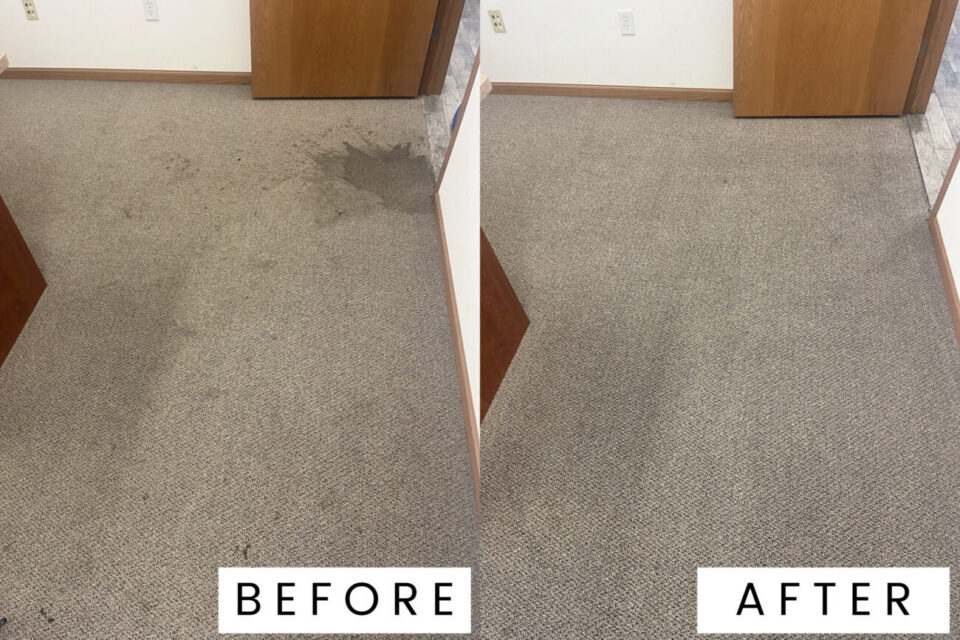
Carpet requires daily vacuuming in high-traffic areas. Not as a courtesy, but as a genuine maintenance step that prevents soil from embedding in fibers. Once soil works deep into carpet pile, it causes premature wear, odor, and permanent discoloration that surface cleaning can’t reverse.
Periodic hot-water extraction (often called steam cleaning) is the industry standard for deep cleaning commercial carpet. Depending on traffic, this should happen every three to twelve months. Carpet tile has the added advantage of allowing individual tile replacement when damage or staining is isolated. Learn more about our commercial carpet cleaning service.
Polished concrete is increasingly popular in commercial and industrial settings for its durability and low maintenance profile, but low maintenance doesn’t mean no maintenance. Daily dust mopping and damp mopping are essential to prevent debris from scratching the surface. Periodic scrubbing with a neutral cleaner and reapplication of concrete guard or sealer will preserve the finish and prevent staining.
Concrete in high-traffic zones may also need periodic diamond polishing to restore the reflective surface when it dulls from use. Reliable Floor Care offers comprehensive commercial concrete care including cleaning and sealing, polishing, and surface preparation.
Tile itself is highly durable, but grout is not. Grout is porous, absorbs soil quickly, and is difficult to restore once it becomes deeply stained. Effective tile and grout maintenance means using the right cleaner at the right pH, scrubbing grout lines periodically, and resealing grout on a regular schedule to protect it from future absorption.
The mistake many facilities make is cleaning tile well, but ignoring grout, and then wondering why the floor still looks dirty. Our tile and grout cleaning service addresses both surface and grout line care comprehensively.
Terrazzo floors are beautiful and long-lasting, but they require surface-specific care. Acidic cleaners, including many common all-purpose products, can etch terrazzo and permanently dull its finish. Proper terrazzo maintenance uses neutral pH cleaners, regular dust mopping, and periodic machine scrubbing followed by resealing or polishing to preserve the surface.
Terrazzo that has lost its sheen through years of wrong products or abrasive cleaning can often be restored through professional grinding and re-polishing, but prevention is far more cost-effective. We offer dedicated terrazzo floor cleaning, terrazzo restoration, and terrazzo repair services.
Natural stone and marble surfaces require cleaners that are specifically formulated to be pH-neutral and stone-safe. Our marble and stone cleaning and sealing service protects the surface from staining and moisture penetration, while marble and stone polishing restores reflectivity and luster when the finish has dulled.
Commercial hardwood floors require soft-bristle tools, non-abrasive cleaners formulated specifically for wood, and strict moisture control. Excess water is the primary threat, it warps planks, damages finishes, and creates conditions for mold. Damp mopping (not wet mopping) with the right product is standard. Periodic recoating extends the life of the finish without requiring full sanding and refinishing.
Epoxy floors in warehouses and manufacturing facilities need daily sweeping and mopping plus periodic inspection for chips, cracks, or delamination that can worsen if left unaddressed. Our commercial epoxy floor care and epoxy deep cleaning services keep industrial and commercial epoxy surfaces performing at their best.
Maintenance frequency should be determined by two factors: floor type and traffic level. A lobby that processes hundreds of people per day needs a fundamentally different schedule than a private office or storage room.
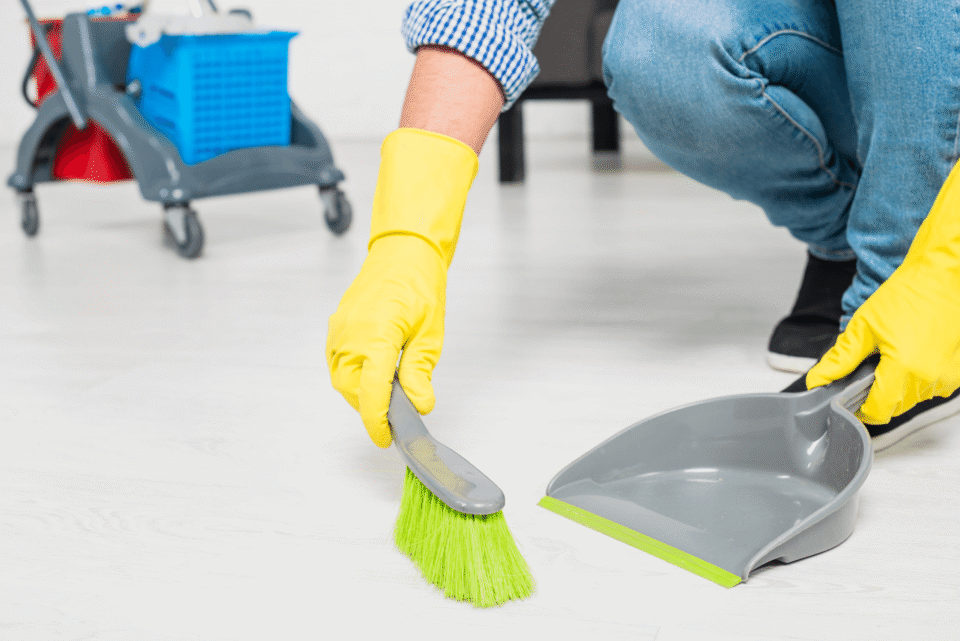
Daily (high-traffic zones): Sweeping, dust mopping, or vacuuming; spot cleaning spills; damp mopping hard floors; addressing entrance mat buildup.
Weekly: More thorough damp mopping of hard floors; targeted scrubbing of problem areas; inspection for early signs of finish wear or damage.
Monthly: Machine scrubbing or buffing of hard floors in high-traffic zones; carpet spot treatment and appearance inspection; grout line assessment.
Quarterly to semi-annually: Deep carpet extraction; floor recoating or resealing for VCT, concrete, and tile; stripping and waxing cycles for resilient floors; professional inspection and condition assessment.
Annually or as needed: Full terrazzo or hardwood restoration if finish has degraded; professional deep restoration for heavily worn surfaces; resealing of exterior or high-moisture areas.
The goal is always to intervene before wear becomes visible damage. Once a finish breaks down, restoration costs increase significantly. For a ready-to-use planning framework, see our guide to building a commercial flooring maintenance plan.
For Milwaukee-area facilities, seasonal conditions add a layer of complexity that facilities in warmer climates don’t face. Winter is especially hard on commercial floors.
Road salt and ice melt track in constantly from November through March, and those materials are corrosive. Salt residue left on floors, especially hard floors and carpet; causes finish breakdown, staining, and fiber degradation. Moisture tracked in from snow and ice creates slip hazards and can damage moisture-sensitive surfaces like hardwood and laminate.
A Wisconsin-specific floor care program should account for:
Getting ahead of seasonal wear is one of the most cost-effective things a Wisconsin facility can do for its floors. Reliable Floor Care serves facilities across the region, including Milwaukee, Waukesha, Menomonee Falls, and Madison.
One of the most common questions facility managers face is knowing when routine cleaning is enough, when deep cleaning is needed, and when a floor has crossed into restoration territory. Here’s a practical framework.
Routine maintenance is appropriate when floors look clean after their normal service, finish appears intact, and there are no visible scratches, stains, or dull patches that don’t respond to cleaning.
Deep cleaning is needed when routine maintenance stops producing a clean result. When mopping leaves the floor looking dull, carpet looks gray after vacuuming, or grout lines remain dark after scrubbing. This is the signal that embedded soil or finish buildup has gone beyond what surface cleaning can address. Our commercial floor cleaning services cover this level of intervention across all major surface types.
Restoration is the step when finish has worn through, the substrate is exposed, or damage (scratches, chips, etching, staining) has penetrated past the protective layer. Restoration typically involves stripping, grinding, or sanding down to a clean surface and rebuilding the finish from scratch. It’s significantly more involved and more expensive than maintenance, which is exactly why staying ahead of it matters.
The transition from maintenance to restoration is gradual, which is why regular inspections are so valuable. A trained eye can catch early finish degradation and address it with a recoat before it requires full restoration. Avoiding the most common missteps is also critical: see our post on the 7 costly mistakes property managers make with commercial flooring.
The right cleaning program requires the right equipment. In commercial settings, consumer-grade tools won’t deliver commercial-grade results.
Autoscrubbers are the workhorses of hard floor maintenance in medium to large facilities. They scrub, dispense solution, and vacuum up dirty water in a single pass, delivering consistent results with less labor than manual mopping.
Orbital machines are versatile tools used for scrubbing, stripping, and polishing across multiple surface types without the risk of swirl marks or uneven results.
Hot-water extraction machines are the commercial standard for carpet deep cleaning, using heated water and suction to pull embedded soil, allergens, and cleaning residue from carpet fibers.
Low-moisture systems are increasingly popular for carpet maintenance between extractions, reducing drying time and disruption in occupied facilities.
Matching the machine to the surface, and making sure operators are trained to use it correctly, is as important as cleaning frequency. The wrong machine, operated incorrectly, can damage a floor faster than neglect.
Many facilities try to handle floor maintenance entirely with in-house janitorial staff. For routine daily tasks, that makes sense. But, periodic deep cleaning, stripping and waxing, recoating, and restoration work generally produce better results and less risk of surface damage, when handled by professionals with the right equipment and training.
Professional commercial floor maintenance also provides:
Not sure what to look for when hiring? Our blog post on 5 qualities to look for in a commercial floor care company walks through exactly what separates professional providers from the rest.
For Milwaukee-area businesses and facilities, Reliable Floor Care provides professional maintenance programs designed around your floor types, traffic patterns, and budget. Whether you need a one-time deep clean or an ongoing maintenance contract, we build programs that protect your floors and your bottom line. You can also explore our process to understand exactly how we approach every job, or browse our floor care gallery to see results from real commercial projects.
Every effective commercial floor maintenance program, regardless of building size or floor type, comes back to the same core principles:
1. Clean consistently, not reactively. Daily maintenance prevents the buildup that makes periodic restoration necessary sooner.
2. Match method to surface. The wrong cleaner or machine on the wrong floor creates damage, not cleanliness.
3. Prioritize high-traffic zones. Not every area needs the same attention, focus resources where use is highest.
4. Schedule periodic deep maintenance before you need it. Recoating on a schedule costs a fraction of restoring a floor that’s worn through.
5. Account for seasonal conditions. In Wisconsin, winter adds significant stress to floors that a year-round maintenance plan needs to address directly.
6. Document everything. A written plan with schedules, logs, and inspection records keeps programs consistent regardless of staff changes.
These principles won’t eliminate every floor problem, but they will dramatically reduce the frequency and severity of issues, and keep your maintenance costs predictable over time. Also see our commercial floor care tips guide for a complementary deep dive on high-traffic building strategies.
Whether you manage a single commercial building or a multi-site portfolio, Reliable Floor Care can help you develop a maintenance program that fits your surfaces, your traffic, and your budget.
Request a free estimate from Reliable Floor Care or contact us to speak directly with a commercial floor care specialist. Have questions first? Check out our FAQ page for answers to the most common questions we hear from facility managers.
Reliable Floor Care provides professional commercial floor maintenance services for businesses, institutions, and facilities across the Milwaukee metro area. Visit us online to learn more about our services.